

4 min
Leading the design of a blockchain guild system for the most hyped video-game on the network
Star Atlas is one of the most ambitious blockchain gaming projects ever built — a AAA space exploration MMO powered by Unreal Engine 5 and running on Solana.
Players truly own their in-game assets as on-chain tokens, from starships to territory. I was brought in to lead the product design of the guild management system from zero to MVP.
1. Problem(s)
Guilds (called DACs — Decentralized Autonomous Corporations) were the backbone of Star Atlas's social economy, but they had no official infrastructure:
No on-chain identity — guilds existed only through Discord servers and spreadsheets, with no verifiable presence in the game ecosystem.
No asset management — shared treasuries, ships, and resources had no secure, transparent way to be collectively managed. Leaders held assets in personal wallets — a trust and security liability.
Declining engagement — without formal tools, guilds struggled to recruit, retain, and organize members at scale.
The challenge: design a system that brings guild governance on-chain while keeping the experience accessible to players who may not understand blockchain mechanics.
2. Collaboration
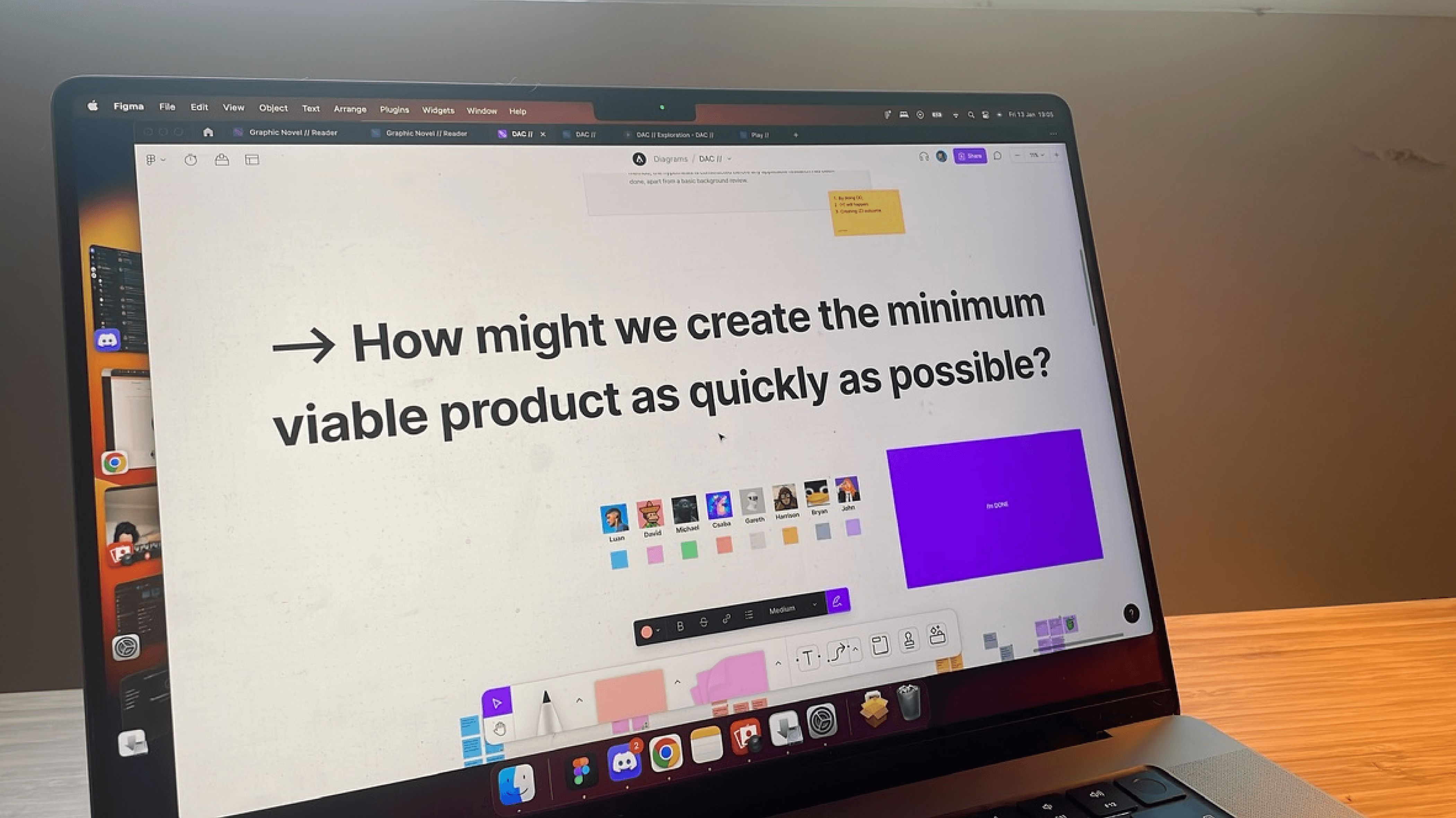
The project kicked off with a cross-functional alignment session involving product, engineering (blockchain + frontend), and game design. We established the core HMW:
"How might we create the minimum viable product as quickly as possible — without sacrificing the trust and transparency that on-chain governance demands?"
From there, I facilitated workshops to map technical constraints (Solana transaction limits, wallet UX friction, on-chain costs) against player expectations. This shaped the scope: what must live on-chain vs. what can be off-chain for v1.
3. User Journeys
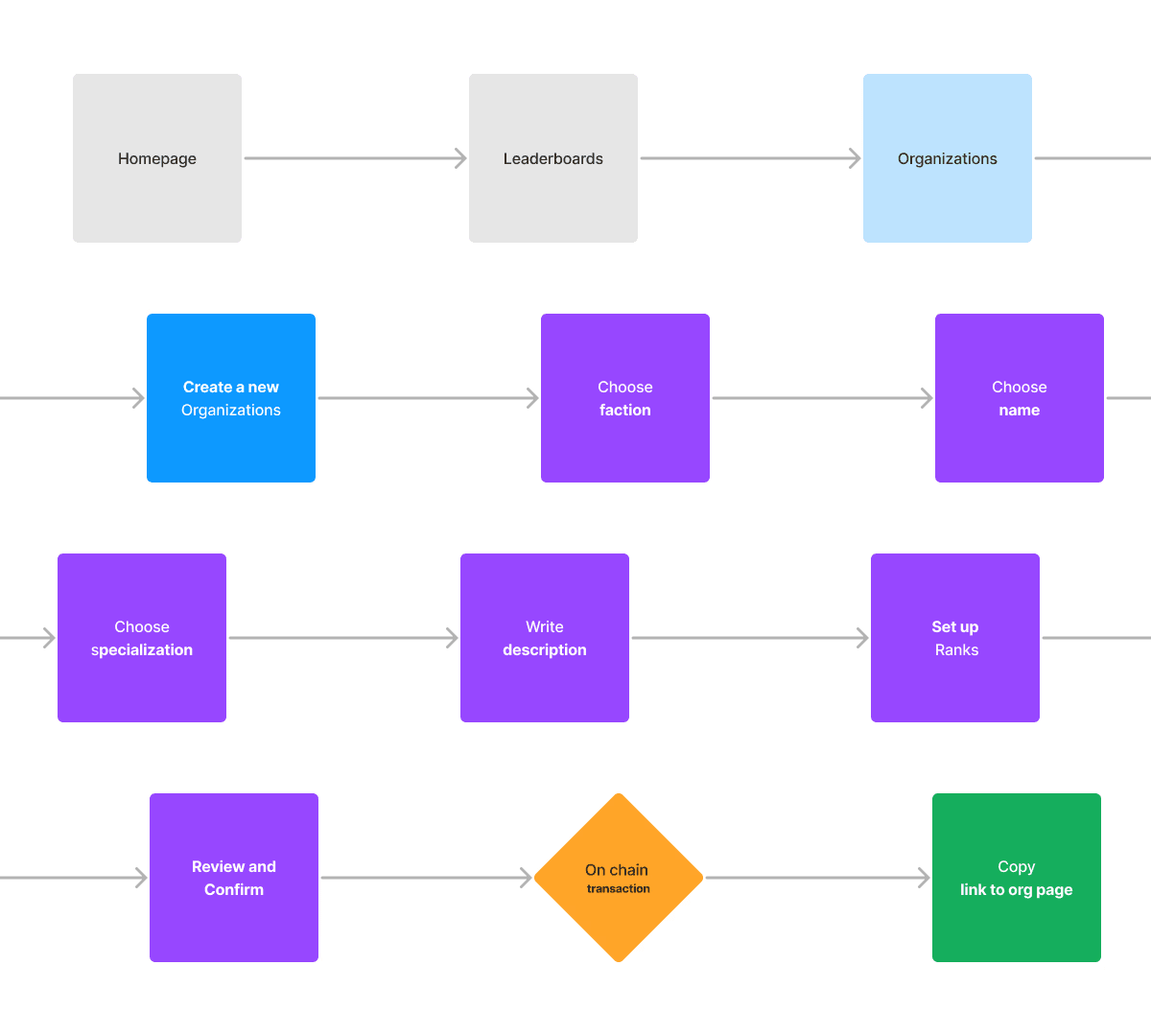
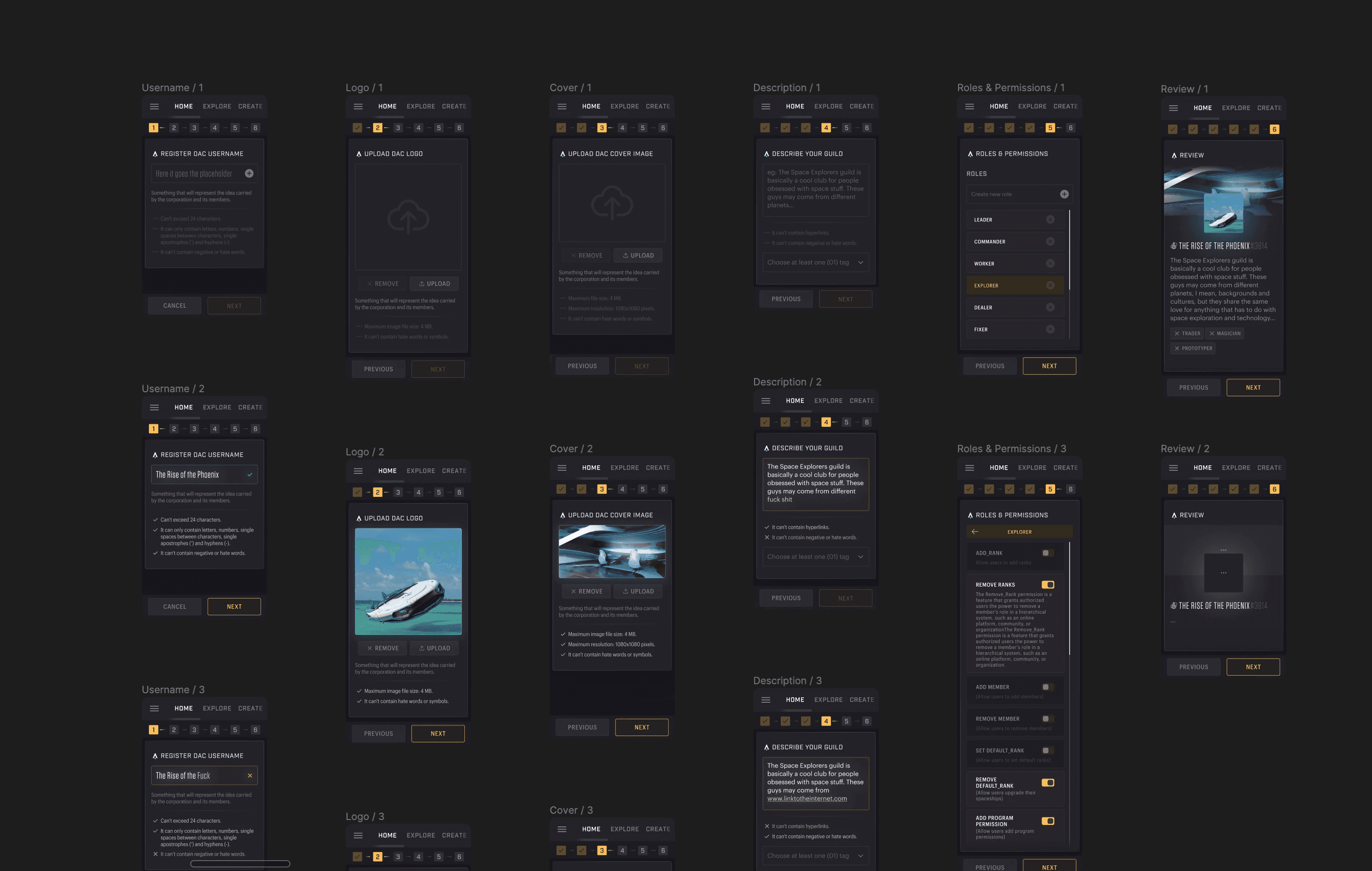
I mapped the end-to-end guild creation flow across multiple iterations, validated with stakeholders at each stage:
Key design decisions:
The creation flow was designed as a progressive, step-by-step wizard to reduce cognitive load — each step is a single decision.
The on-chain transaction was intentionally placed at the end, after the user has invested effort, reducing drop-off from wallet friction.
Post-creation, the shareable link drives immediate recruitment — turning creation into a distribution moment.
4. Diagrams
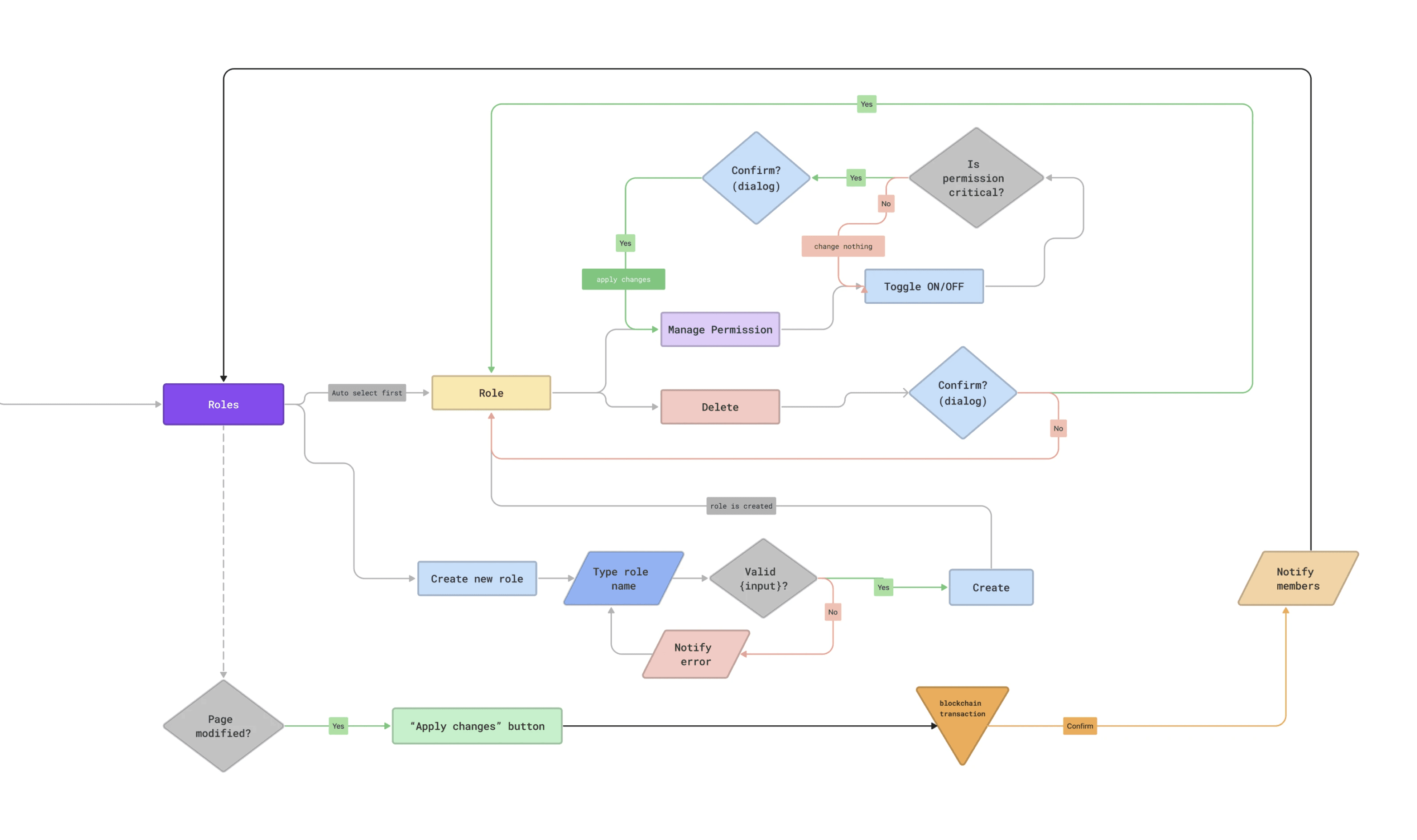
I built detailed user flow diagrams covering the role and permission management system — one of the most complex areas due to blockchain implications.
The flows mapped every path for role creation, permission toggling, and member management, including:
Critical permission changes requiring on-chain confirmation dialogs
Non-critical changes that batch and apply together to minimize transaction costs
Deletion flows with confirmation gates to prevent irreversible on-chain mistakes
Edge cases like "what happens when the last admin tries to delete their own role"
All diagrams were reviewed and validated with blockchain engineers to ensure technical feasibility before moving to wireframes.
5. Sketches
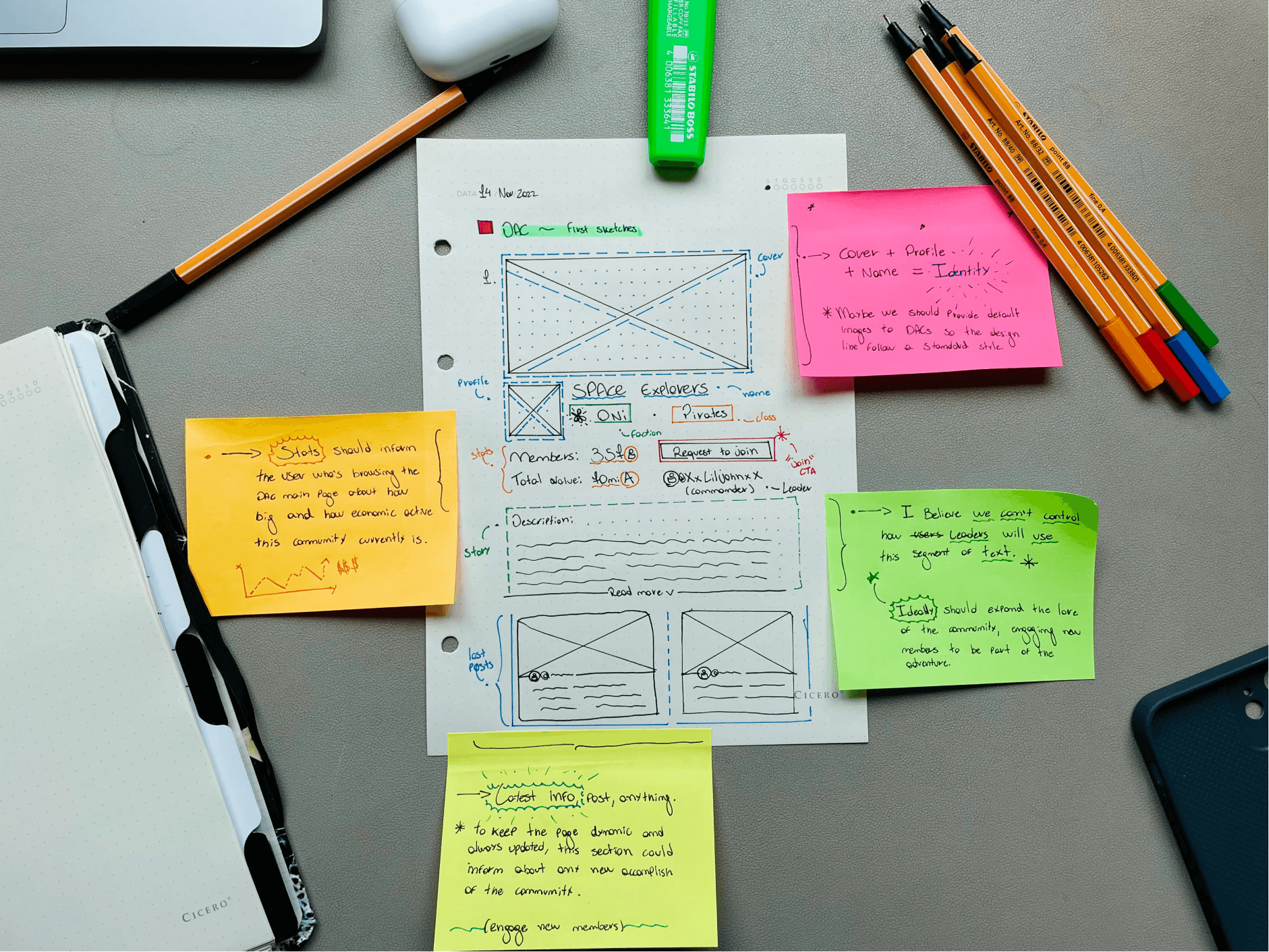
Early ideation explored how guilds should manifest within the Star Atlas ecosystem:
Should guilds live as a dedicated platform, a page within the game UI, or both?
How do users verify a guild's authenticity before investing time, effort, and assets?
What information hierarchy builds trust at first glance — treasury size? member count? faction alignment? verified badge?
Sketches were done on paper with sticky-note annotations, focusing on information architecture and layout variations before committing to any digital direction.
6. Wireframes
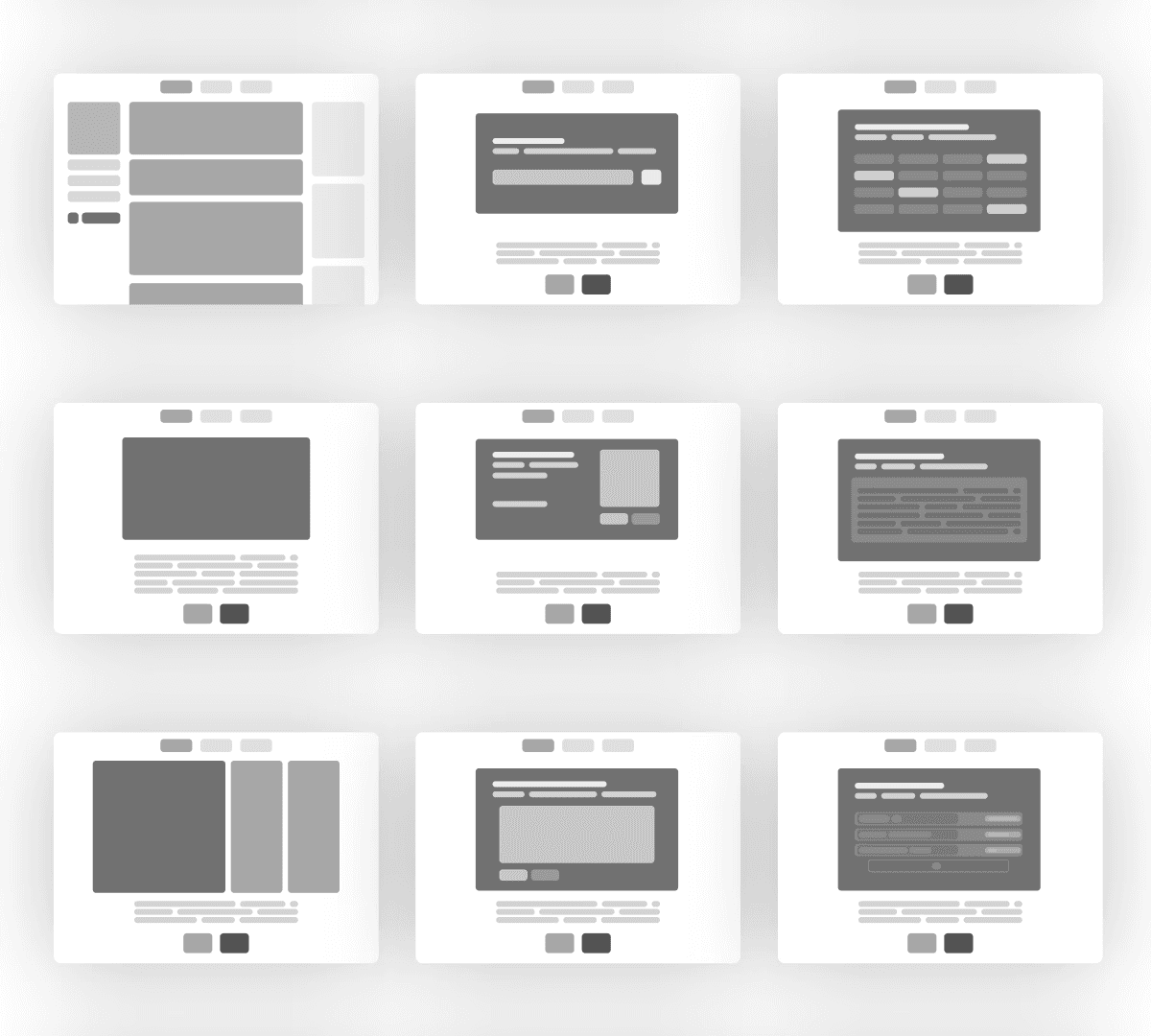
I produced a matrix of 9+ wireframe variations exploring different layout strategies for the guild management interface:
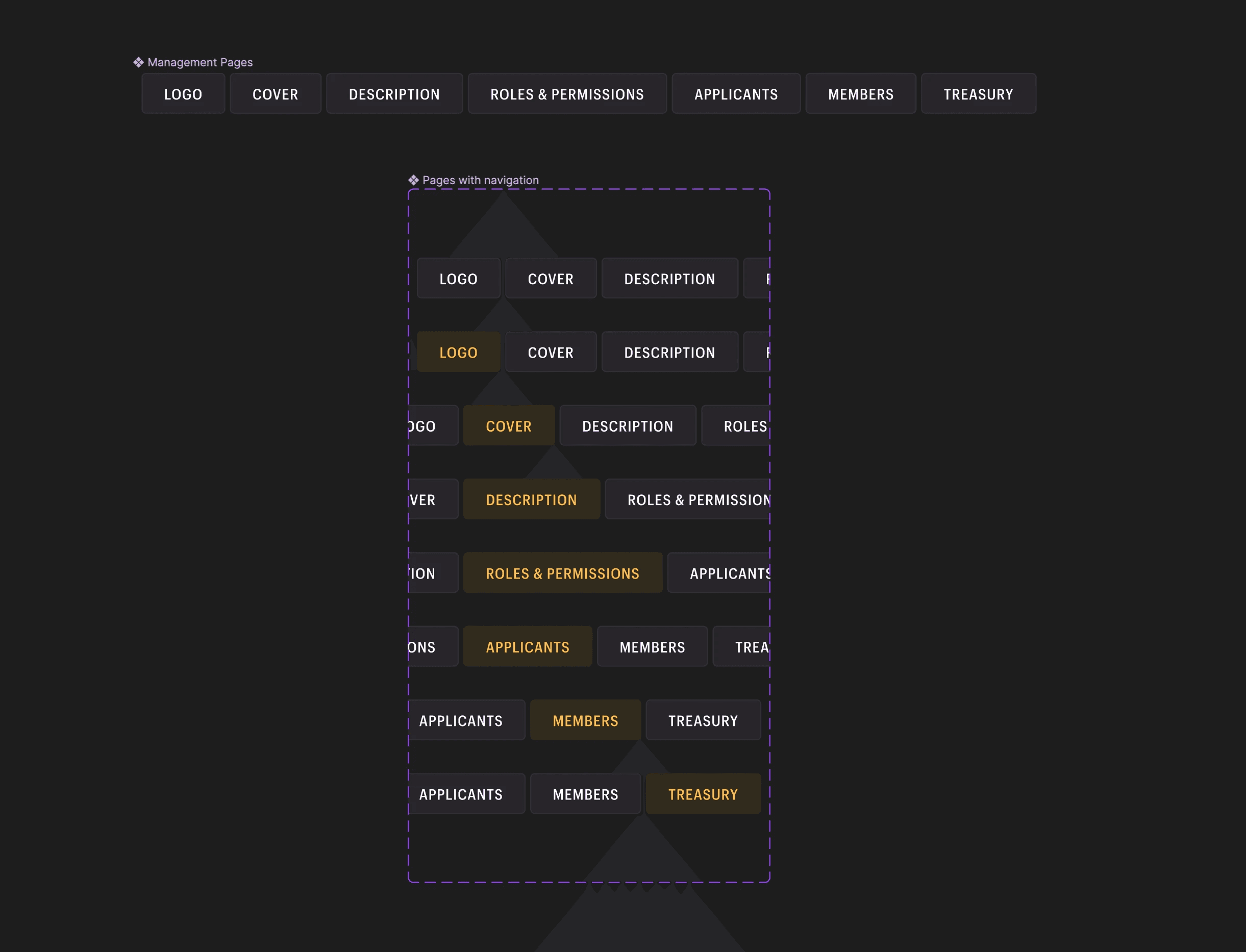
Left-panel navigation vs. top-tab navigation for management sections (Logo, Cover, Description, Roles & Permissions, Applicants, Members, Treasury)
Dense admin views vs. focused single-task views for different user roles
Responsive considerations — the system needed to work across desktop webapp and mobile
Wireframes were tested internally with the product team to narrow down to 2 directions before moving to visual design.
7. Visuals
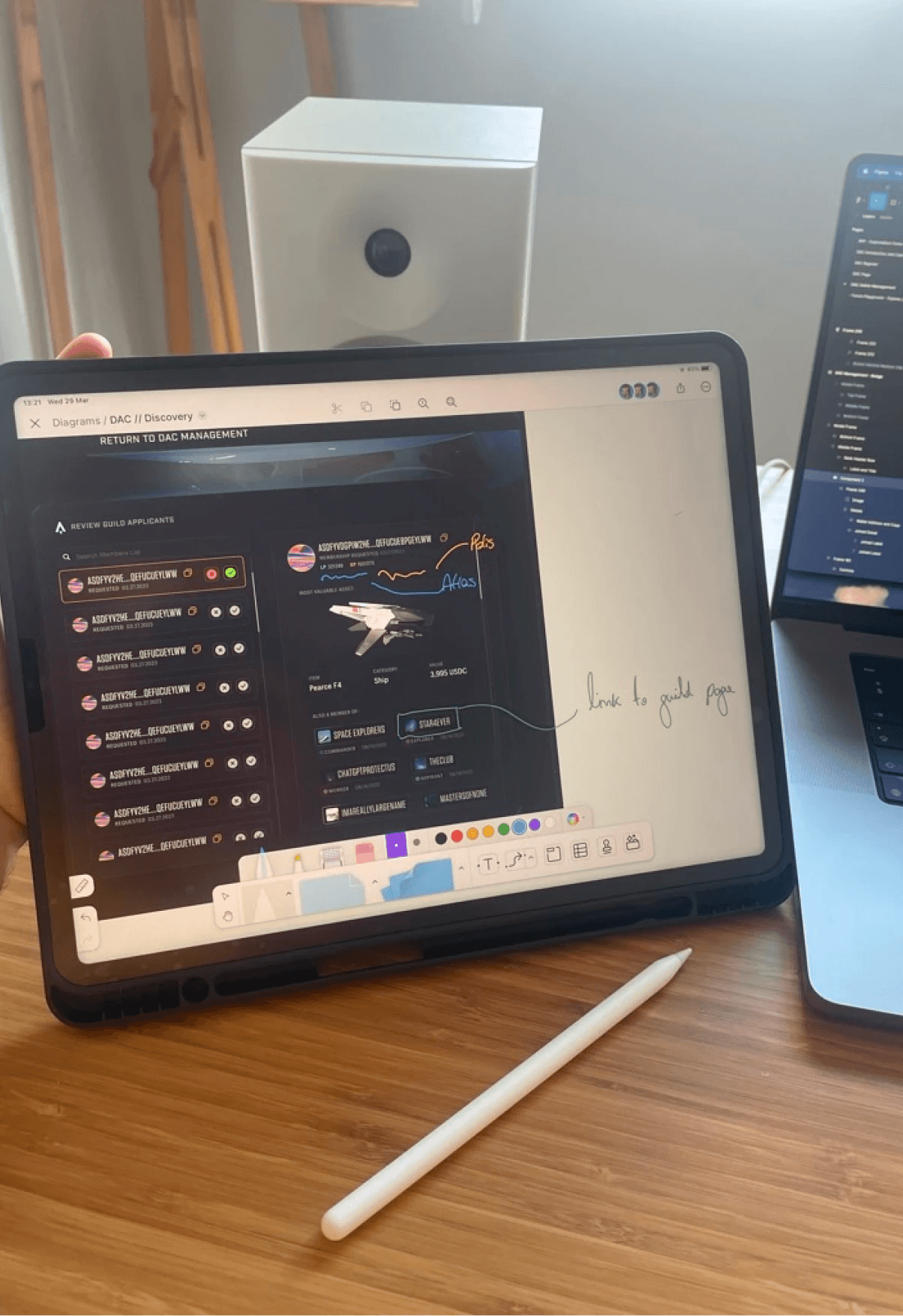
First high-fidelity UI concepts were built to validate the design direction with a user pool. The visual language needed to:
Align with Star Atlas's existing dark, sci-fi aesthetic
Clearly surface blockchain-specific data (wallet addresses, token balances, on-chain status) without overwhelming non-crypto-native players
Differentiate between the public guild page (recruitment-facing) and the management dashboard (admin-facing)
Annotations and review sessions were done directly on the prototypes using iPad markup for fast async feedback cycles.
8. Components
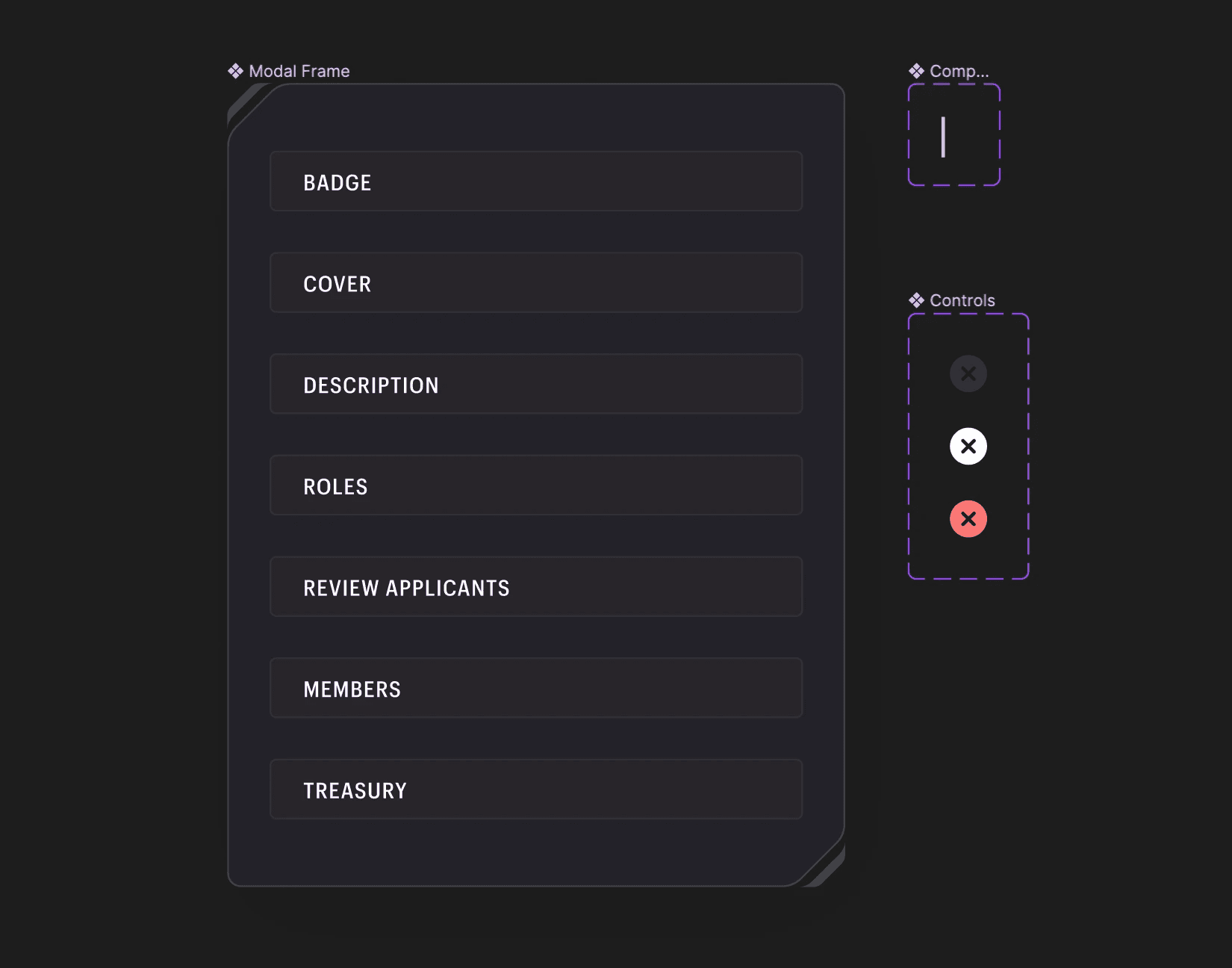
Modal Frame — standardized container for all management actions (Badge, Cover, Description, Roles, Review Applicants, Members, Treasury)
Navigation Components — management page tabs with active states and progressive disclosure, scrollable on mobile
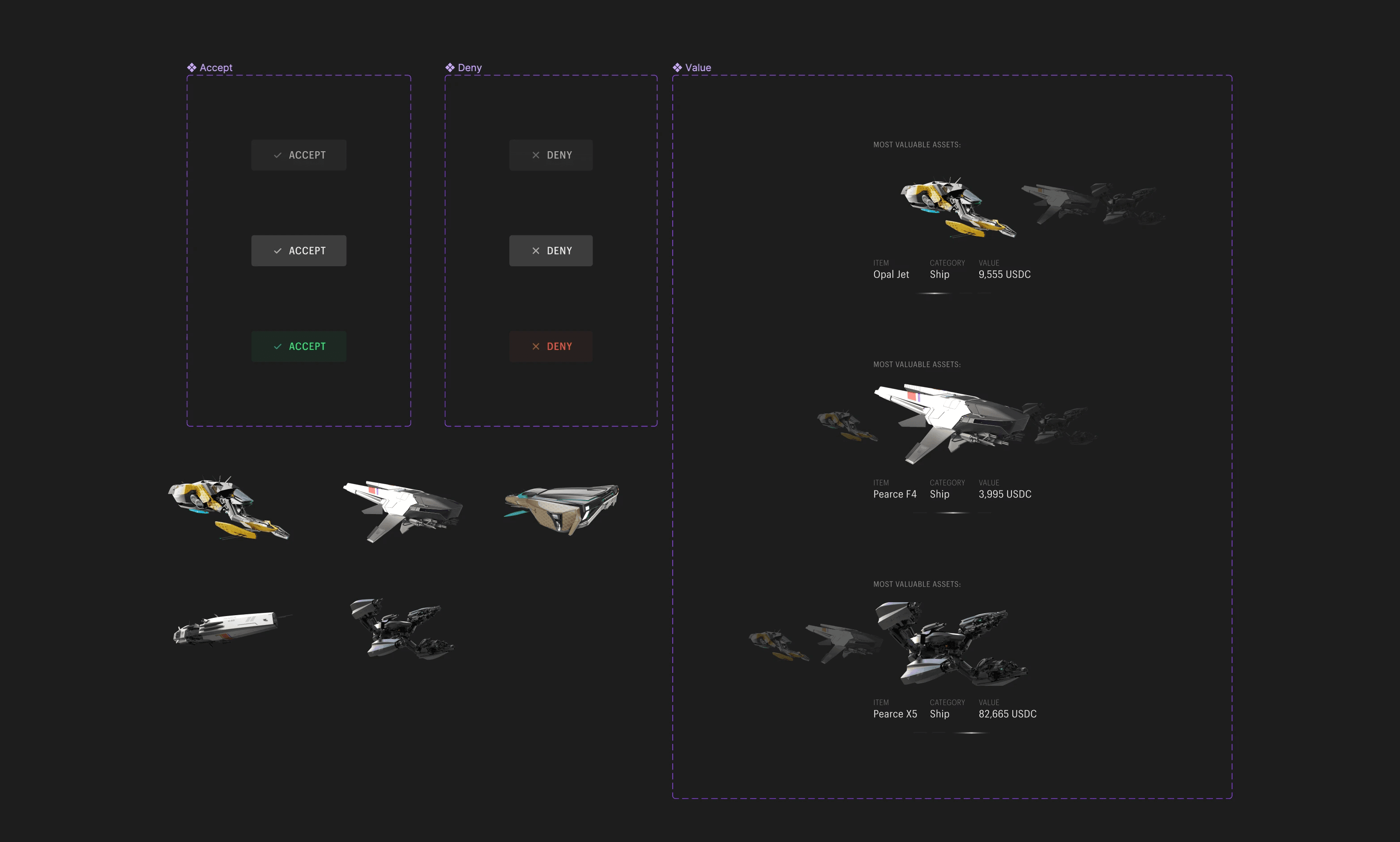
Action Controls — Accept/Deny states with visual hierarchy for applicant review
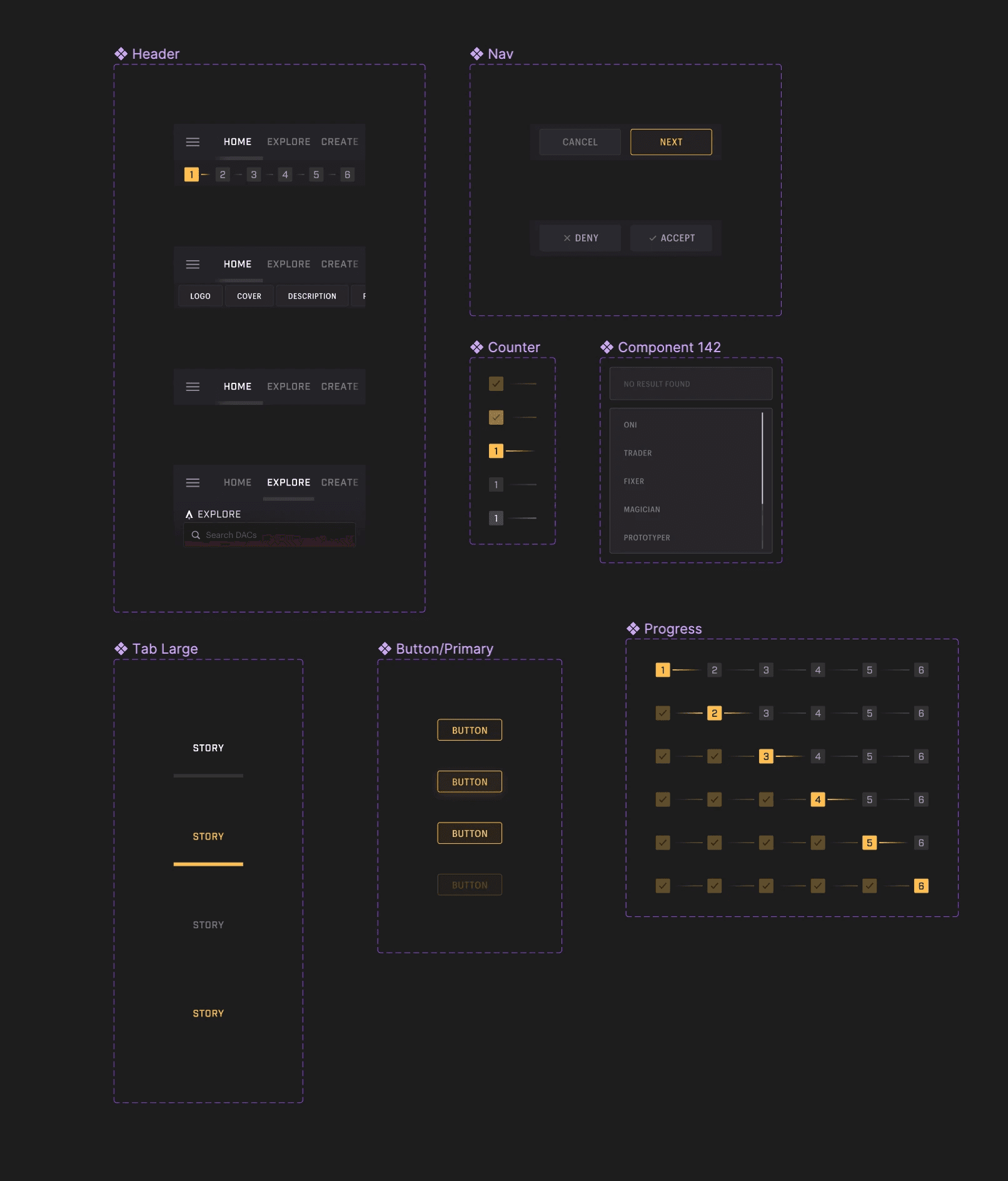
Asset Cards — ship/item display with rarity, class, and USDC value
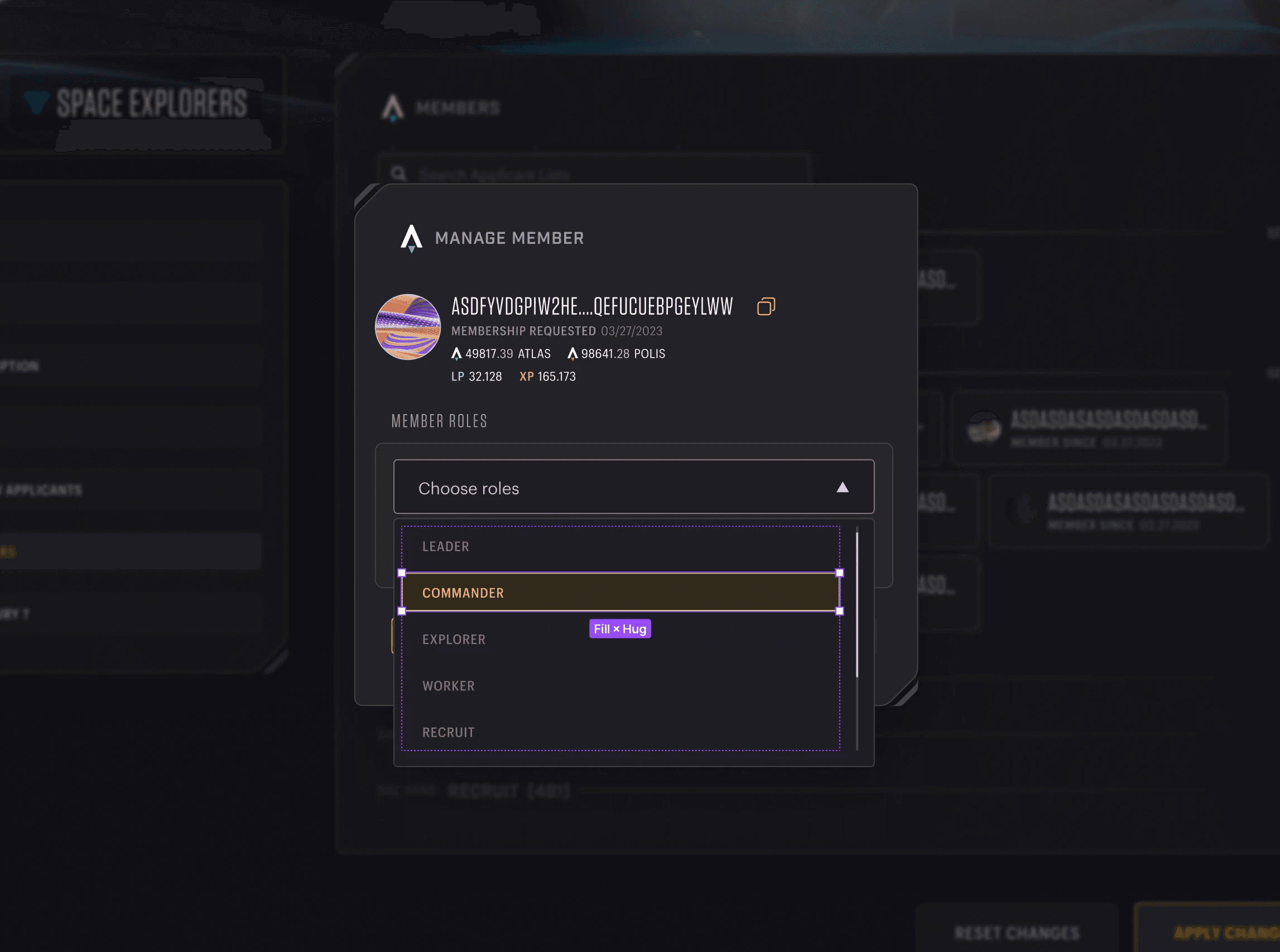
Role Selector — dropdown with hierarchy levels (Leader, Commander, Explorer, Worker, Recruit) and color-coded indicators
Progress Stepper — 6-step creation wizard with completed/active/pending states
Header Variants — contextual top navigation adapting between Home, Explore, and Create flows
All components were built with variants and designed for handoff to frontend engineers working within Star Atlas's existing tech stack
9. Interface
The final interface delivers two core experiences:
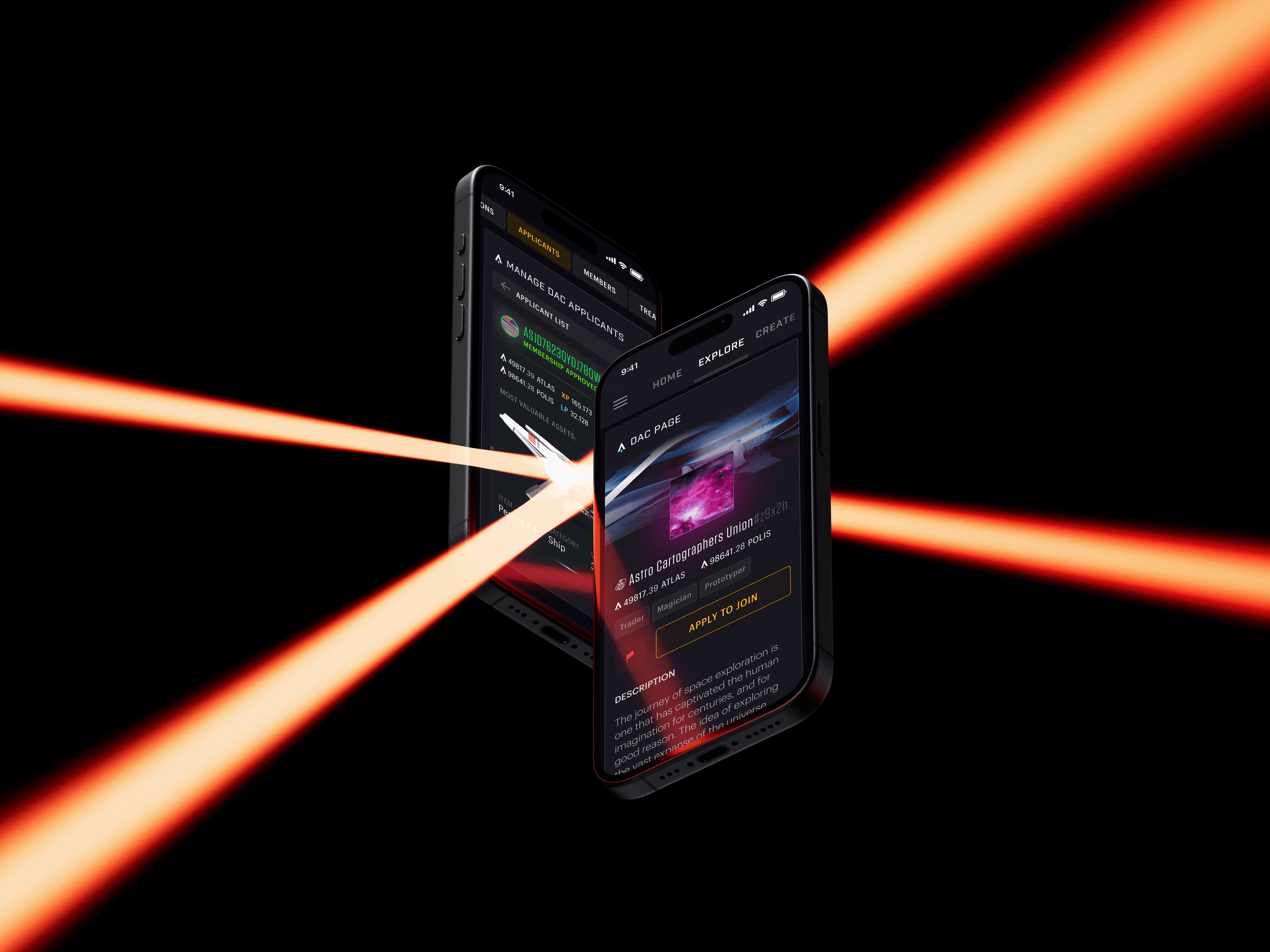
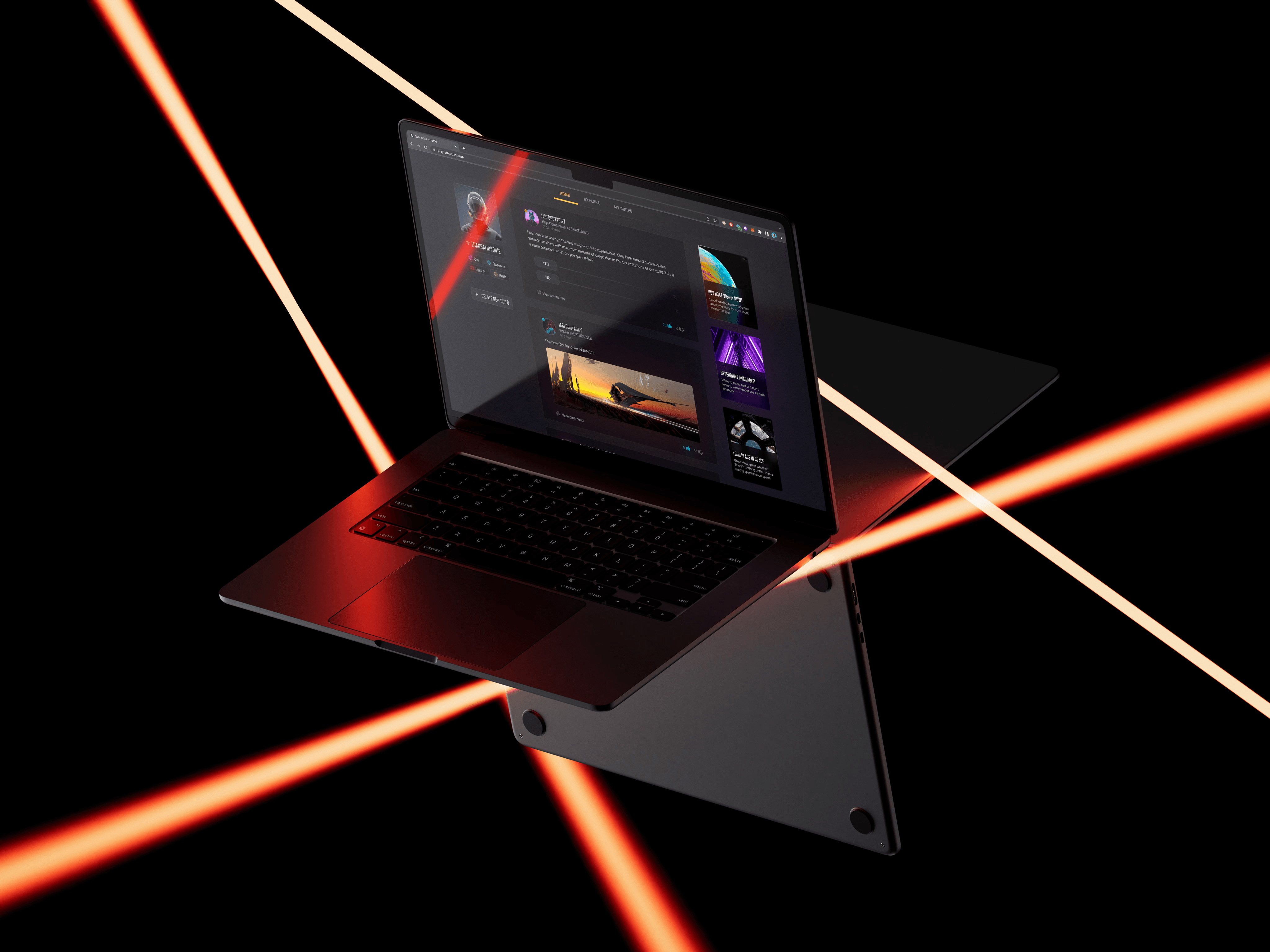
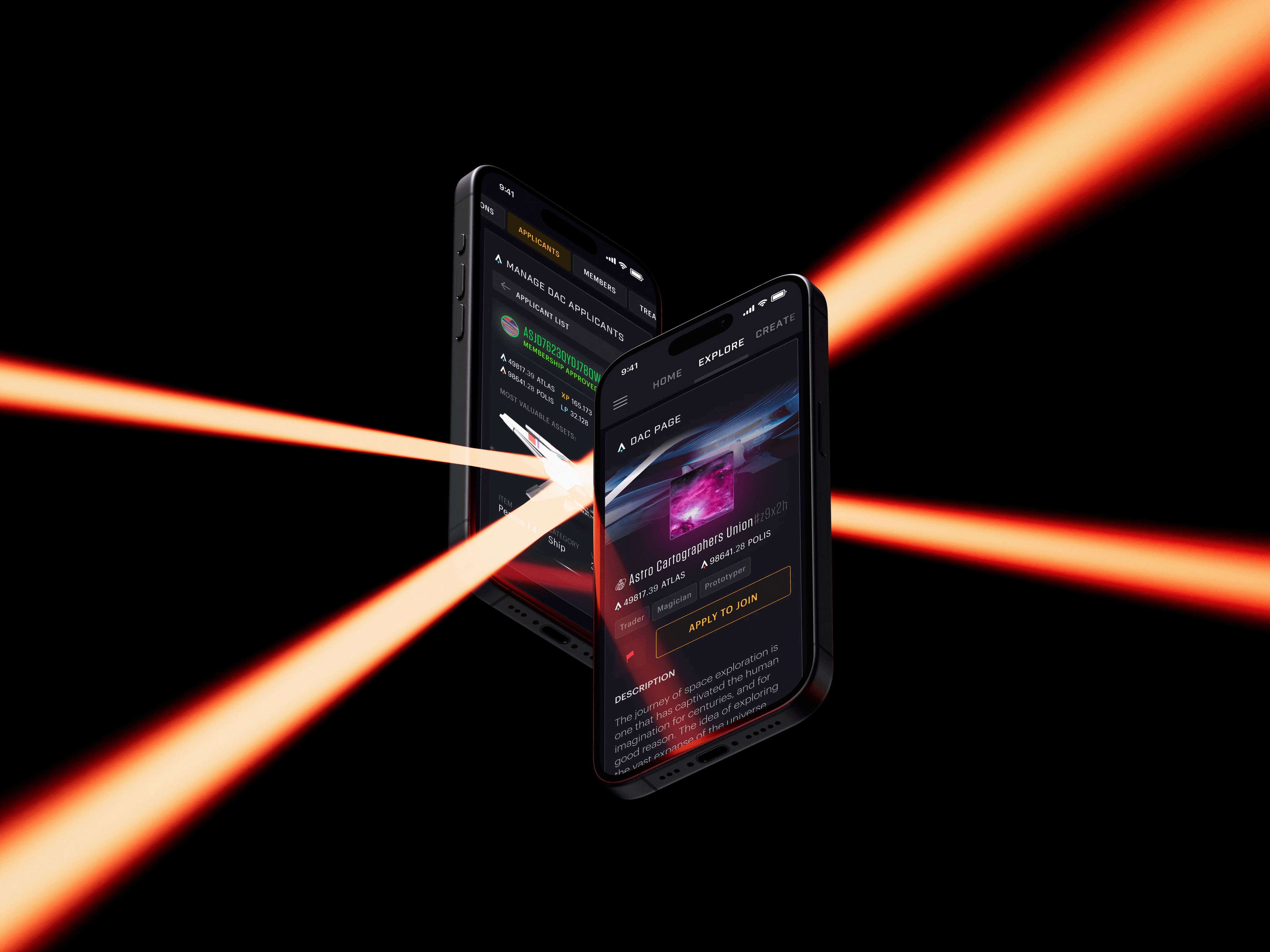
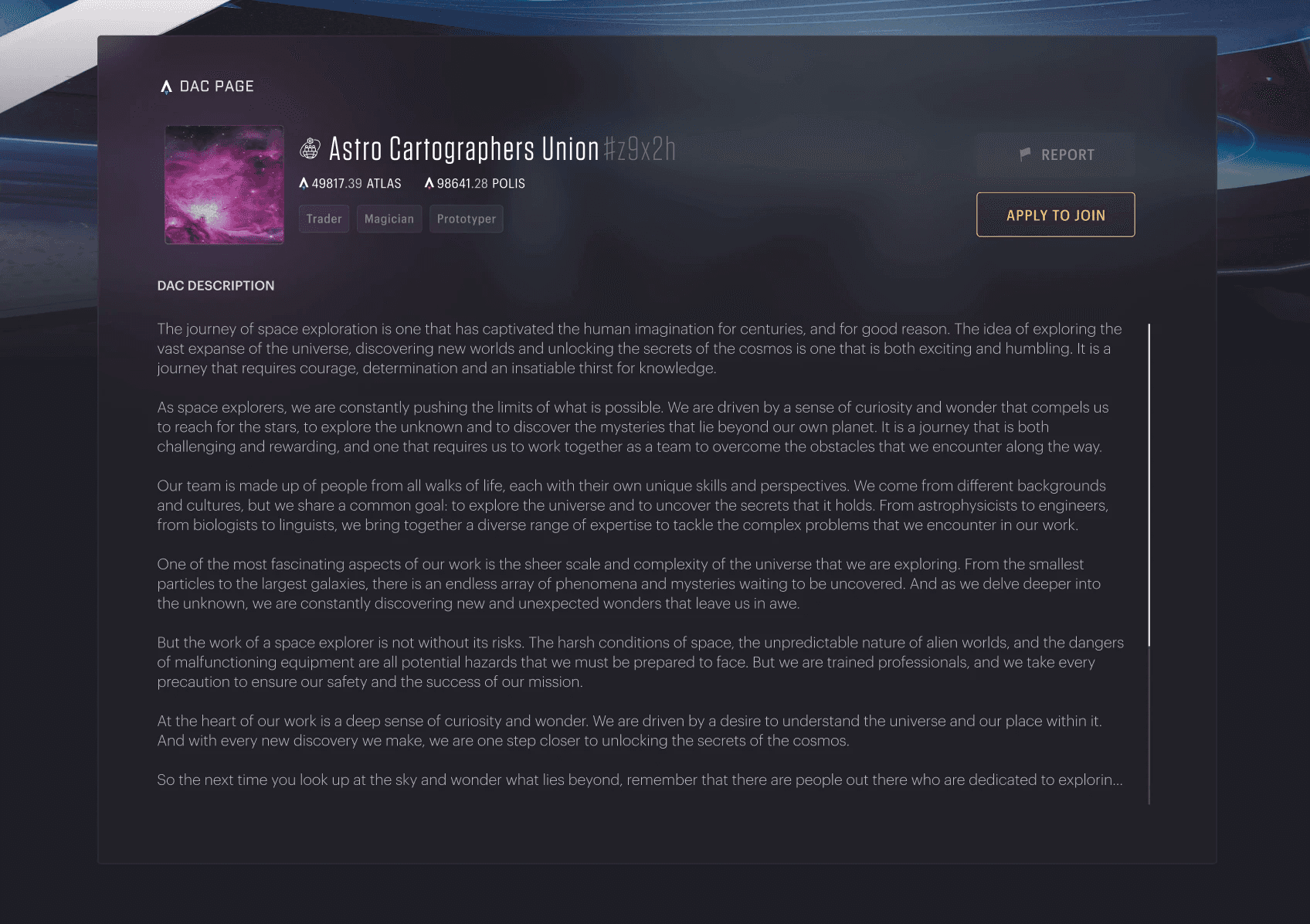
DAC Page (Public) — the guild's on-chain identity. Displays the organization name, verified hash, ATLAS/POLIS treasury balances, faction tags, specializations, description, and a prominent "Apply to Join" CTA. Designed to build trust and drive recruitment.
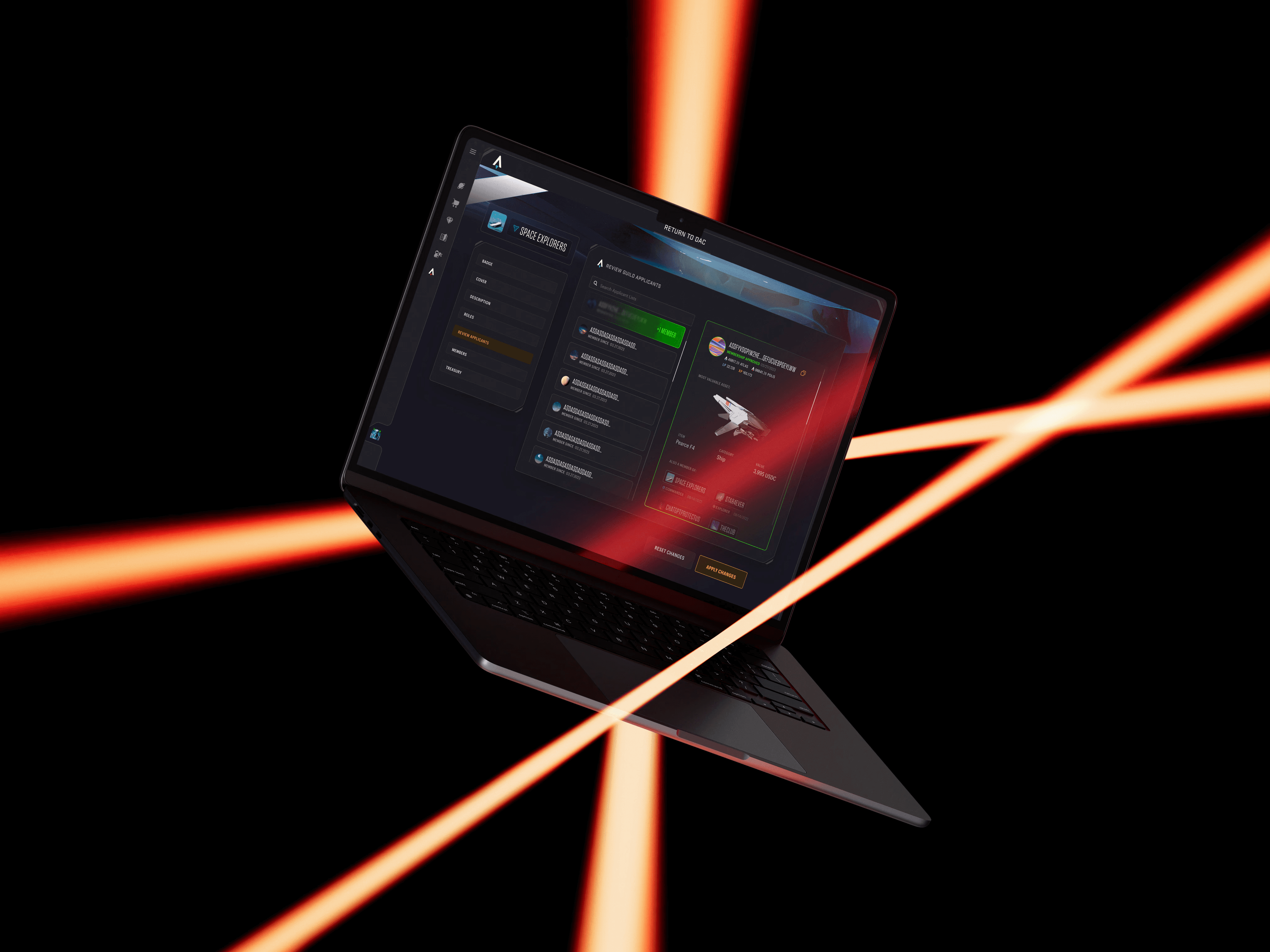
Management Dashboard (Admin) — a comprehensive toolset for guild leaders to manage members, review applicants (with full wallet history and asset visibility), assign roles with granular permissions, and oversee the shared treasury. Every state-changing action surfaces a clear confirmation flow before triggering on-chain transactions.
Both experiences are fully responsive — designed for desktop-first but functional on mobile, where a significant portion of the Star Atlas community operates.
10. Results
Shipped MVP in X weeks, from kickoff to production
130+ DACs created within the first month of launch
System processed 200k+ on-chain transactions in the first quarter only with DAC assets
Positive reception from the Star Atlas community —